
Post-Viral Fatigue
Back to Your Strength with Naturopathy
It is only since the Corona pandemic that post-viral phenomena have clearly moved into public and scientific considerations. A significant phenomenon here is post-viral fatigue, which should by no means be trivialized, as it can mean that some of those affected have to spend most of the day lying down. Even though science and medicine have not yet been able to fully uncover the exact causes and processes in the body, complementary approaches can offer promising assistance. The aim was to work on a wide variety of levels, which is what the following article is intended to show.
Post-viral fatigue has not only been around since the last pandemic, but rather for much longer. Often, it was not taken seriously or not referred to as such before. Basically, a wide variety of viruses such as influenza, the herpes family (especially Epstein-Barr), the hepatitis family, TBE, HIV, tropical strains and many others can cause post-viral fatigue. Corresponding phenomena also occur among bacterial pathogens.
Post-viral fatigue is generally regarded as fatigue or exhaustion that continues to occur or occurs again after surviving a viral infection, which can lead to permanent restrictions and impairments in performance, but cannot be attributed to another illness. A scientific distinction is currently made between different terms such as “fatigue” – physical, mental or spiritual exhaustion due to various complaints. The chronic form can be attributed to various underlying diseases such as tumors or anemias. Post-viral fatigue is the one mentioned here, while post-viral fatigue syndrome refers to a comprehensive complex of symptoms and already has clear similarities to chronic fatigue syndrome (CFS/ME ), which is listed as a separate clinical picture and can significantly restrict the lives of those affected.
Symptoms
Post-viral phenomena can show up like a chameleon, especially in the context of Post-COVID or Long-COVID, and cause a wide variety of symptoms. The term “fatigue” should therefore not hide comprehensive symptoms. Above all, a distinction can be made between physical, mental and cognitive complaints.
The physical symptoms include limited physical performance, feelings of weakness and exhaustion, muscular weakness, permanent malaise after physical activity, rapid onset, severe and persistent fatigue, as well as headaches and dizziness. Listlessness, fear of overload, emotional withdrawal and decreasing interest in hobbies with the risk of depression as well as frustration can mentally manifest themselves. Cognitive complaints such as decreasing mental performance as well as word-finding and concentration disorders manifest themselves in a non-specific way.
Naturopathic Approaches
For reasons of space, only a small part of the naturopathic possibilities can be mapped here. The list could probably go on for a long time. Depending on where the focus of your practice work lies or which preparations you work with, other branches of naturopathy can of course correspondingly also be used. Nevertheless, I would like to offer you as wide a range of recommendations as possible:
Micronutrients
We all know that empty micronutrient stores are not exactly conducive to recovery, especially after longer and recurring phases of infection. Appropriate blood tests with regard to the current status quo of various vitamins and trace elements would therefore be urgently recommended in the case of post-viral fatigue.
The B Vitamins (including B1, B6 and B12) are particularly noteworthy. Vitamin C levels can also be replenished by infusions, among other things. Vitamin E serves primarily as an antioxidant and should therefore be urgently taken into account. Coenzyme Q10 as well as glutathione, for example, are very important for cell metabolism and can have a decisive influence on one’s own energy level. Calcium should be considered for the bones and magnesium for the muscles. But above all, the iron and folic acid levels should be examined with signs of fatigue and exhaustion.
Mycotherapy
The use of medicinal mushrooms has in the meantime long ago reached our Western world and offers unimagined possibilities due to exciting ingredients. However, it is important to pay attention to intolerances, adjust the dosage to the patient and choose the dosage form.
- Reishi: Probably the best-known medicinal mushroom is considered a jack-of-all-trades and can be used for a wide variety of ailments. It can be used as a supplement, especially in the case of a weakened immune system and after viral infections. Reishi strengthens physically and mentally, balances the ability to regenerate and the nervous system and can increase the oxygen saturation of the blood.
- Hericium: The Lion’s mane contains a number of high-quality micro- and macronutrients (carbohydrates, fiber, minerals, proteins) and therefore offers holistic support. It can have a positive influence on intestinal health and flora, be indicated for melancholy and promote the formation of the myelin layer of nerve pathways.
- Cordyceps: The Chinese caterpillar mushroom gives strength and can increase stamina and willpower. In Traditional Chinese Medicine (TCM), it is the mushroom of choice for kidney problems. The kidney is considered the storage space of our energy, it is the root of life and must be strengthened in case of fatigue and weakness. Cordyceps has anti-inflammatory, antioxidant, detoxifying and neuroprotective properties.
Hildegard von Bingen
The rich wealth of knowledge of the universal scholar Hildegard von Bingen fills entire books, which is why I would like to limit myself here to only three simple recommendations on her part:
- Galangal root powder – Pulvis radix galangae: Galangal is considered one of the best-known Hildegard remedies of all. Its powder should be used one to three times a day instead of pepper for seasoning and can be used as a supplement for viral infections, fatigue and weakness. Other products are galangal honey and galangal tablets, which should be dissolved on the tongue one to three times a day.
- Arum Elixir – Decotum An Rhizoma: The elixir can be used as a supplement for exhaustion and permanent fatigue as well as their accompanying symptoms of nervousness, stress, psychosomatic complaints, melancholy and depressive moods. Depending on the intensity of tiredness, one to five liqueur[-size] glasses can be drunk at indefinite times daily.
- Benedictine Herbal Tea – Centaurea Benedicta: This is recommended for digestive and liver-gallbladder problems, loss of appetite and associated fatigue and exhaustion, as well as for support after phases of illness.
Schuessler Salts
Dr. Schuessler’s pioneering discoveries have by no means lost their relevance today and can be particularly useful for immune weakness, to strengthen the power or for a balanced energy metabolism.
- 02 Calcium phosphoricum D6: It can be used as a restorative salt in cases of high susceptibility to infections and promote regeneration after long illnesses. It has proven itself in exhaustion and fatigue to regain strength.
- 05 Potassium phosphoricum D6: This Schuessler salt is indicated for nervousness, melancholy and sleep problems, can bring inner peace and strength and is a source of energy for body, mind and spirit. If the energy metabolism of the cells is not sufficient, nerve or muscle weaknesses as well as concentration and memory problems can be the result.
- 08 Sodium chloratum D6: As a balance salt, it regulates the immune system and can be used for detoxification, lack of drive, exhaustion and digestive problems, among other things.
Mental Level
By no means should the mental level be ignored in post-viral fatigue. Especially with chronification, our mind also suffers significantly from the rapid exhaustion after little exertion. A cooperation between psychologists, naturopaths and alternative practitioners for psychotherapy would therefore make sense, depending on the severity of the symptoms. Following, I would like to address some points on how the mental level can be supported.
Lifestyle
Constant exhaustion and necessary rest periods can severely disrupt the biorhythm and daily routine. It is not for nothing that some of those affected are unable to work or only have limited resilience. Therefore in practice, attention should also be paid to the topic of lifestyle and daily organization. A reasonably fixed routine with recurring rituals can provide mental security and stability. In discussions and direct application, various adjusting points can be discussed in order to have more energy available.
The basis for the entire day is, of course, the night’s rest. Parameters such as the sleeping place, the pillow and the mattress can significantly influence the quality of the night. But the morning also lays important foundations for the day: A sufficient breakfast that puts little strain on the system (e.g. with oatmeal, cooked fruit, porridge, nuts) and a little morning exercise (breathing techniques, Qigong) can get body, mind and spirit going. Lunchtime can pose a risk of a low due to a longer meal, which is why a targeted, but time-defined rest period can help here.
A complete Autogenic training exercise sequence or an imaginary journey with the possibility of resting afterwards (about 30 minutes in total) offers the parasympathetic nervous system the opportunity to digest, but then stimulates light activity again. The evening hours also want to be used and the day consciously ended. Sleep rituals, a reflection on the day, a good book or physical exercises can help to set gentle stimuli and still glide restfully into sleep.
Hypnosis
The subconscious mind can also play a central role in persistent post-viral fatigue when it comes to overcoming beliefs or tapping into resources that can remind us of old power and strength. Hypnosis does not replace medical interventions and does not simply resolve physically conditioned complaints, but rather aims to encourage people to use ideas, thoughts and positive emotions to go through the day fresher, more hopeful and more motivated. Certain visualization exercises, targeted self-hypnosis instructions or simple imaginary journeys are intended to help change parts stored in the subconscious that additionally promote post-viral fatigue.
But also direct hypnosis with a therapist, where the body’s own resources are activated and anchors are created that are used in everyday life for further practice, can not only stabilize the mental level, but also underline self-efficacy. Your own subconscious mind plays an important role in the recovery process, which is why hypnosis in combination with naturopathy can offer exciting starting points.
Mindfulness and Meditation
The constant feeling of being let down by one’s own forces can lead to a loss of sensitivity. Those affected no longer know what they can trust their body to do or what a normal state feels like. Every day seems to be marked by the same challenges and feelings of powerlessness blur a conscious perception of the outside.
One possibility to retrain your own sensitivity is to do mindfulness exercises. Here, all senses can be integrated in a simple way. It doesn’t matter whether you focus on the taste of the individual components of a meal, consciously feel every step while walking, feel your body with your eyes closed or sit down in nature and observe. Although the possibilities can be significantly limited, even in the smallest of things there are starting points to live more mindfulness again.
Meditation can also help to strengthen concentration and direct attention away from the exhaustion to a perception free of value. For example, with very quiet music, you can simply observe breathing or the sounds outside. Thus also mantra meditations or simple focuses can also serve you well. A few minutes a day can be enough to strengthen the mind.
Fig. 1: One way to retrain one’s own sensitivity is to perform mindfulness exercises.
(Picture not shown in this translated version.)
Mild Exercise
Promoting and encouraging one’s own physicality can be a great challenge, depending on the intensity of post-viral fatigue. As already mentioned above, after a while you can lose the feeling for your own limits. By significantly reducing movement, muscle mass can also be reduced, which further increases exhaustion after low physical exertion. A vicious circle begins. For this reason, a cooperation with physiotherapists, osteopaths and also masseurs can be considered to encourage the patient to move gently within the range of his possibilities. A few inspirations follow:
Qigong
The method, which comes from martial arts, forms an essential component for holistic health in TCM. The gentle, flowing movement sequences pay attention to posture, breathing and focus and are carried out less by exerting force, but much more by following the life energy (Qi).
A distinction is made between Qigong at rest and in motion. The former uses imagination, meditation and the conscious directing of energy to areas of the body that are lacking. Moving Qigong is better known and uses posed postures from the animal kingdom to reactivate the Qi by performing the sequences. Depending on the individual situation, Qigong makes it possible to start with quiet exercises and gradually add simple movement sequences. In this way, access to one’s own body can be regained and the willingness to challenge and train it again can be promoted.
Body Exercises
Physical exercises tailored to the patient’s situation should not only serve to maintain the ability to move, but also support the feeling of one’s own physicality. Feeling the body while stretching, relaxing or exercising can help you to have more confidence in yourself again. Exercise units can be scheduled in the morning and later in the afternoon so as not to experience additional fatigue caused by lunch, the evening hours or the early morning.
Depending on the severity of the exhaustion, the visualization of movement can also be started at the beginning. Here we go a bit in the direction of hypnosis again. But research knows: What I can imagine, I will be able to implement more easily at some point. Then you can slowly start with simple movement – such as a walk around the garden or climbing stairs. Gymnastics, balance or mobility exercises may well be a small challenge, but doable. This level probably represents the greatest inhibition threshold in working with post-viral fatigue, because patients fear overload again due to physical activity. Appropriate support, trust and gradual development are therefore essential.
Conclusion
Post-viral fatigue has thankfully received more attention in recent years, but its research is still in its infancy. Depending on the symptoms, it can entail a variety of restrictions for those affected, which is why it is so challenging to put together an “optimal” therapy. Naturopathic approaches in combination with mental considerations and movement stimuli contribute to leading body, mind and spirit holistically into one’s own power. Natural power and self-efficacy contribute significantly to going through everyday life with more energy again.
Philipp Feichtinger
Keywords: Chronic diseases, Fatigue, Immune system, Post-viral fatigue
 An Exclusive Translated Article for Praxis2Practice Supporters
Published February 2026
From an article in CO’Med, Volume 31, October 2025
Translation & redaction by: Carolyn L. Winsor, P2P Consulting
© Copyright 2025, CO‘Med, Philipp Feichtinger, Germany
AI Digital and online translation assistance utilized.
The Author

Phillip Feichtinger, HP
Philipp Feichtinger is a Heilpraktiker, a naturopathic and hypnosis therapist focused on holistic health. As a trained secondary school teacher (Austria), working with children is close to his heart. He is an Organetics (organic ethicist) practitioner, coach and author. He runs his own practice in Austria. As a lecturer and course instructor, he holds seminars and writes for various health magazines.
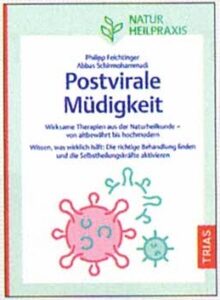
Book:
Philipp Feichtinger & Abbas Schirmohammadi:
Post-viral fatigue
ISBN: 978-3-432-11977-9 TRIASSIC, 2025
Literature
- Deutsche Gesellschaft für ME/CFS eV Postvirale Fatigue nach einer Corona-Infektion: Kann man von ME/CFS lernen. 2020. Online unter: mecfs.de/postvirale-fatigue-nach-einer-corona-infektion-kann-man-von-me-cfs-lernen/
- Feichtinger 1 Niedan-Feichtinger S. Schüßler kurz & bündig. Stuttgart: Trias, 2023.
- Hickie I et Post-infective and chronic fatigue syndromes precipitated by viral and non-viral pathogens: prospective cohort study. BMJ 2006; 333(7568): 575.
- Schmaus F Das große Handbuch der Mykotherapie. Niederdorfelden: MykoTroph, 2018.
- Strehlow W Die Hildegard Naturapotheke – Heilmittel und Rezepte von A-Z. München: Droemer Knaur Verlag, 2014.