
Supporting Autistic People Holistically
How Nutrition and Intestinal Health
Can Make Everyday Life Easier
Today we know that people on the autism spectrum have specific needs that should be taken into account. Less common is the connection between intestinal health and the well-being of those affected. Dr. med. Petra Wiechel presents an integrative approach from the practice.
By Dr. med. Petra Wiechel,
Chief Physician at the Swiss Mountain Clinic, Castaneda (CH)
As a physician, I regularly observe that children and adults with autism not only have neurological characteristics, but often also send out physical signals that we have previously overlooked. When families then report that targeted dietary changes have led to more eye contact, better sleep and less irritability, the question arises: Why don’t we use this potential more systematically? Symptoms and disturbances associated with autism can often be significantly improved.
The Gut and Autism
People on the autism spectrum often complain of abdominal pain, constipation or restless digestion. This is no coincidence. The intestine is much more than just a digestive organ. It is home to a highly complex ecosystem of billions of bacteria, produces about 90 percent of the body’s own serotonin and constantly communicates with the brain via the vagus nerve, hormones and immune neurotransmitters. Several scientific studies show that children on the autism spectrum are more likely to suffer from gastrointestinal complaints than neurotypical children and that their gut microbiota is less diverse.
The problem is not always visible. When the intestinal wall becomes permeable, the so-called leaky gut phenomenon occurs, toxins and inflammatory substances enter the blood directly. This puts additional strain on the entire organism, and neuronal signal processing can be influenced. Affected children then react more sensitively to sensory stimuli, sleep worse, show stronger tics or become irritable more quickly. This is where a holistic perspective comes in. Many people report strong reactions after eating certain foods. However, these are often not classic allergies, but delayed intolerances. These only affect sleep, behavior and concentration hours or days later. For example, a child eats a bit of bread for breakfast, and in the evening he becomes restless and cannot fall asleep. The connection is overlooked because the reaction does not follow immediately. In practice, this is a centrally important but often neglected aspect.
Early Imprinting With Longterm Consequences
The development of the immune and nervous systems begins before birth and continues in the first months of life. The type of delivery, the duration of breastfeeding and the first foods have a decisive impact on the microbiome. Statistically, caesarean section children show a lower diversity of intestinal flora. If you switch to bottle feeding at an early stage, this can further weaken the immune system. An unbalanced microbiome in this critical phase increases susceptibility to chronic diseases and neurodevelopmental disorders. This is not automatic, but a serious risk factor that we should take into account in the anamnesis. In practice, I regularly see children with the so-called coated stool phenomenon, a stool that is covered in mucus and fungi and smells suspicious. This underestimated factor indicates massive miscolonization. Parasites such as giardia or worms are also involved more often than conventional medicine assumes, often without classic symptoms such as diarrhea. But in sensitive children, such stresses significantly increase motor restlessness, increase irritability and cause sleep disorders. Targeted microbiological diagnostics can be the decisive turning point here.
People on the autism spectrum often complain of abdominal pain, constipation or restless digestion.
Observe, Relieve, Supplement
At the Swiss Mountain Clinic, we work according to a proven triad. First of all, we observe closely. We analyze the intestinal microbiota, measure inflammatory markers and examine for toxic loads such as heavy metals. Micronutrients such as zinc, B vitamins and Omega-3 fatty acids are also recorded. A special focus is on the barrier function of the intestine: the zonulin value indicates how permeable the connections between the intestinal cells are. An elevated level of Alpha-1 antitrypsin in the stool indicates that proteins are leaking through the intestinal mucosa and that the protective function may be impaired.
A special focus is on the barrier function of the intestine.
Another factor is pyroluria. In this case, certain degradation products of the body’s metabolism are increasingly found in the urine. These molecules bind vitamin B6 and zinc, exactly the substances that the body needs for stress regulation and nerve function. Especially in the case of autism, it is worth taking a look at this metabolism.
In the second step, we provide targeted relief. Instead of over-treatment, we rely on proven measures: A temporary renunciation of gluten, dairy and refined sugar, supported by an anti-inflammatory diet with plenty of vegetables, broths and healthy fats. Bitter substances and fiber promote natural elimination. Exercise, sufficient water and rest are part of it. The liver deserves special attention. Many affected people show reduced enzyme activity, genetically or due to environmental factors. Secondary phytochemicals from artichoke, milk thistle or broccoli sprouts can support them.
In the third step, we add in a targeted manner. Omega-3 fatty acids promote brain function. Magnesium improves sleep. Zinc and B6 are particularly useful for pyroluria. Probiotics are introduced only after stabilization of the intestinal barrier. Methylation aids such as methyl-B12 or active folate help many people, especially if there is a genetic disposition.
Practical steps to try
- Keep a diary for two weeks. Record sleep quality, behavior, and meals. This is how you recognize patterns.
- Eliminate sweet drinks strictly. Sugar is a silent inflammation accelerator and belongs at most to main meals.
- Test a gluten-free, and then a dairy-free diet for four weeks, strictly, but without stress and pressure to be perfect, the family should go along, otherwise it is too stressful.
- Incorporate nutrient-dense foods: broths, stews, steamed vegetables, high-quality oils, and regular exercise.
- Support natural detoxification through bitter substances, sufficient water and physical activity. Sauna is valuable if the child or adult likes it.
- Use supplements only in a targeted manner and under medical supervision. An all-inclusive full supply is counterproductive.
- Check regularly, adjust and move on, without pressure to perfection. Small improvements are success.
A History From The Practice
A seven-year-old boy came to me with a diagnosis of autism, pronounced tics and severe sleep disorders. He could hardly be brought to rest, the parents were exhausted. We started with simple steps: four weeks without dairy, gluten and sugar, homemade bone broth every day, a regular daily rhythm. After a few weeks, the first changes, less restlessness and longer periods of play became apparent. After three months, the tics decreased noticeably. After one year, the parents reported more eye contact, emotional stability and increased joie de vivre. The change in diet was supplemented by specifically selected micronutrients, liver compresses, bitter juices and gentle intestinal cleansing. A diary helped the family to recognize connections and document progress. Not every child reacts so quickly or so clearly. But history shows that the body talks to us when we learn to understand its signals.
Therapeutic measures, especially dietary changes and supplementation, should be guided by a doctor.
Invitation To Rethink
From my practice, I can say that many small, consistent steps often bring noticeable relief, which can significantly improve accompanying stresses such as sleep disorders, irritability and digestive problems. This is physiological logic: If the intestine is calmed, if the number of inflammations decreases, if nutrients are sufficiently available, then the nervous system also has more buffers. Therapeutic measures, especially dietary changes and supplementation, should be guided by a doctor. Do not try it alone at home, because some interventions can be contraindicated: Calorie restriction can be harmful to the health of underweight children. In the case of known kidney problems, other measures are required. If you have acute symptoms or uncertainties, contact specialized experts.
A modern practice networks diagnostics, individual support, lifestyle changes and mutual trust. The holistic approach does not exclude other therapies, on the contrary. Good results can often be achieved when families combine different pathways, such as Behavioral Therapy for social skills, Logopedics (Speech Therapy) for speech, Ergotherapy (Occupational Therapy) for motor skills, and in parallel, nutrition and gut health for the physical base. Every child and every person deserves a chance and support that suits them. It takes open eyes and a courageous heart to break new ground.
Dr. med. Petra Wiechel
 An Exclusive Translated Article for P2P Supporters
Published September 2026
From an article in raum&zeit, Volume 44, Nr. 260, March/April 2026
Translation & redaction by: Carolyn L. Winsor, P2P Consulting
© Copyright 2026, raum&zeit, Petra Wiechel, Germany
AI Digital and online translation assistance utilized.
The Author
 Dr. med. Petra Wiechel
Petra Wiechel, MD is a specialist in general medicine (Germany) and an expert in biological medicine (University of Milan). For over 25 years, she has been dedicated to causal medicine and the holistic view of health. As chief physician of the Swiss Mountain Clinic in southern Switzerland, she combines state-of-the-art diagnostics with traditional healing methods. Her focus is on biological cancer therapy, environmental medicine and individually tailored detoxification therapies, among other things.
Dr. Wiechel is active internationally as a speaker at specialist congresses and reaches a wide audience with her weekly TV format Visite auf QS24.tv . It stands for medicine that brings body, mind and soul into harmony – evidence-based, empathetic and consistently patient-oriented.
Mandatory Information
This article does not replace individual medical advice.
It serves as information and orientation. Every therapeutic measure, especially dietary changes and supplementation, should be guided by a doctor.
If you have any acute complaints or uncertainties, please contact your doctors.
Recommended Reading
Current studies on the Gut-Brain Axis in autism can be found on PubMed under the search terms “autism microbiome” and “gut-brain axis autism spectrum disorder” [translated terms].
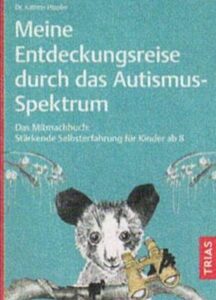 Book Tip:
Dr. Kathrin Nippier: „Meine Entdeckungsreise durch das Autismus-Spektrum: Das Mitmachbuch: Stärkende Selbsterfahrung für Kinder ab 8“, Trias Verlag, 2025, 24,-€, ISBN 978-3432119526